Showing posts with label cancer. Show all posts

Friday, May 2, 2014

Bladder Cancer, Complication and Treatment


Complication


The common complications you can face because of bladder cancer, are listed in following ;

1)        Urinary tract Infection  : your urinary tract can develop block along path from kidneys to bladder or just at junction of ureters and bladder. Dilatation of pelvi-calyceal system, hydronephrosis may result. The resulting complication is infection of your urinary tract.

2)        Metastasis or spread :  Your bladder cancer can spread either locally to adjacent surrounding lymph nodes, bones and peritoneum, or to distant organs like lungs and liver. 

3)         Depression   : This is undeniable reality that after you are told about having bladder cancer, you life just gets into shock mode. Until you come to  terms depression sets in. You feel gloomy and hopeless.  

4)           Recurrence of cancer      :  This not uncommon happening, several years after treatment. Follow up of your bladder cancer hence becomes necessary.


Spread to outer layers.

 Pharmaceutical therapies

The modalities of treating your bladder cancer largely depend upon the stage or invasive nature of your tumor. It is to be managed by team of experts, includes RIA expert, surgeons and your consultant oncologist.  The following standard protocol may be applied alone or in combination, in your bladder cancer treatment;

1)     Surgery      :  This is generally applied for non-invasive superficial cancer of bladder. It is done by trans-urethral route. The technique is termed TURBT or transurethral resection of bladder tumor. It has shown very good results, but meticulous follow up is advised to you after your tumor has been removed. Although recurrence is not uncommon, but placing chemotherapeutic agent (Mitomycin C) inside your bladder at TURBT, will minimize the risk of recurrence.

2)      Radiation therapy  :  you may be subjected to high energy x-ray or ionizing radiation, which will kill or inhibit  the cancer cells growth in your bladder. Either applied as external radiation to your bladder, from machine outside or radiation in form of internal radioactive substance placement into the cancer or near it, through needle or probe or catheter.


Chemotherapy set

3)       Chemotherapy        :   The chemotherapy  applied in your bladder cancer can be intravesical. All the chemo medicine not only just kill cancer cells but the also damage the surrounding normal cells. This is done by means of tube passed through urethra into your cancerous bladder. Following chemo drugs will be given for your bladder cancer :

Ÿ                 Cisplatin
Ÿ                 Mitomycin 
Ÿ                 Methotrexate
Ÿ                 Vinblastine
Ÿ                 Doxorubicin

These chemotherapeutic agents are given intravenously in slow infusion. Whereas misogynic C is instilled or place locally into your bladder tumor mixed with sterilized distilled water.

Side effects of chemotherapy you may experience are, nausea ,vomiting, headaches, weakness , appetite, loss of hairs, loss of weight, marked lowering of immunity with risk of severe infection attacking your body. Irritation with bladder lining inflammation, anemia, thrombocytopenia(lowering platelets count) with easy bruising, oral thrush(fungal infection ),dry and soreness of skin, brittle nails, memory impairment.


Biological therapy         :   The principle of treatment is based on boosting your immune system to fight the aggressive and damaging cancer cells. You will receive BCG vaccine(bacillus calmette Guerin), locally instilled into your cancerous bladder. This is most suited in non-invasive, initial stages of your cancer. It also minimizes risk of recurrences. It enhances the immune system, which targets and kills your bladder cancer cells.


Ÿ  Interferon:  is yet another treatment ,which works in same manner as BCG, enhancing your immunity. It is produced in body naturally and synthetically manufactured Interferon µ2b is used to have the effect. The mode is instillation into cancer area of your bladder through intra-urethral tube.

Saturday, April 26, 2014

Bladder Cancer

Bladder cancer


 Introduction

Urinary bladder, commonly known as bladder, is located inside your pelvic cavity, in the lower region of your abdomen. It serves the purpose of collecting urine via ureters from kidneys and stores it. After receiving micturation reflex it discharges the liquid waste, urine to outside through your urethra.
The organ is the seat of abnormal overgrowth of cells inside lining of your urinary bladder. The mechanism that set cancer growth lies in the change in your bladder lining cells DNA structure. The result is the development of tumor, which spread within your balloon shaped organ. Although it is a cancer that is diagnosed at early stages as compared to cancers of other parts ,but keep it in mind that, it has greater tendency for recurrences . Like any other cancer or malignant growth, your bladder cancer too, spreads to adjacent organs and via blood circulation to distant parts like liver, lungs, bones.

The different types of cells lining your bladder can develop into cancerous growth. The types of bladder cancer encountered are broadly grouped into  following two sub types depending upon their invasive nature;

1)                Superficial or non-invasive bladder cancer  :  This bladder cancer variety remains confined within the inner lining of mucosa and lamina, and does not go deep into muscular lining wall. According to cell type these commonly are called, urothelial or transitional cell carcinoma. This type of bladder cancer comprises of more then 90% of bladder malignancies across the globe. The statistics reveal this variety to be the most commonly  occurring cancer of bladder in US. On rough estimates 7 out of 10 bladder carcinomas are of this variety and they are generally of less serious nature. Deaths rarely occur with this type of bladder cancer.

2)                 Deep seated or invasive  bladder cancer         :  When your bladder cancer has invaded or penetrated the surrounding muscular lining of your bladder they may become severe in symptoms and lethal at times. They are least common type of bladder carcinomas, but they have tendency to spread to neighboring structures and distant locations of your body. The invasive types are subdivide into;

Ÿ                       Squamous cell carcinoma of bladder   :  Sometimes constant irritation or inflammation as it happens in bladder stones or certain parasite infection, may result in formation of  squamous cells growth and development of bladder cancer over a period of months or years. About 4-8% of bladder cancers are of squamous cell type.

                      Adenocarcinomas of bladder               : This cancerous growth is in mucous secreting glands of your bladder wall. Like the squamous cell variant, it also develops into abnormal cell growth because of long standing inflammation/irritation in your bladder wall. Metaplasia of bladder cell takes place, which spreads into deeper muscular lining of your bladder wall. These account for 2% of bladder malignancy.


 Signs and symptoms of bladder cancer         

Ÿ                               Blood in urine               :       The first and most common symptom of your bladder cancer is macroscopic( visible to naked eye) hematuria(blood in urine). Although ,sometimes it becomes necessary to analyze your urine under microscope to confirm for hematuria.
                      
Ÿ                            Frequency of urination       :              Unlike normal period of interval in passing urine ,you may feel going for urination after very short interval. You pass very small amount each time.


Ÿ                             Pain during passing urine    :        formation of blood clots in passage of your urine may cause pain when you urinate. There may be sense of burning during passing urine(dysuria).

Ÿ                            Urgency of urination                   :   You feel you may soil your cloth, as the intense desire to void or empty the cancerous bladder gets beyond your control. But you will feel the output does not match the desire you felt, hence this cycle may be repeated.

Ÿ                             Incontinence of urine              :  It is one extreme of urgency ,when you are unable to control or hold urine from leaking out of your urethra. Either it keeps leaking from time to time or there is complete emptying of your cancerous organ, without warning.

Ÿ                          Weight loss                                  :    loss of appetite and consequent loss of your weight is one of features of your bladder cancer. Sometimes you will find it hard to cope with ,even you are eating well you are loosing weight. This may warrant seeing your doctor for evaluation.

Ÿ                          Pelvic pain                                        :  Although it is rare , but the pain in your pelvic region may be a symptom of bladder cancer, due to tumor growth and nerve stretching in bladder lining.

Ÿ                              Legs swelling                                    : In some of you with bladder cancer, legs become swollen as result of pressure of growth on venous drainage or spread of tumor to other parts of urinary system.


2.0 Causes and Risk factors

The definitive etiology of your bladder cancer is still not brought to light. The uncontrolled or abnormal growth which takes place during development of you tumor has been attributed to following significant factors ;

Ÿ          Cigarette smoking :  The most common variety of bladder cancers, urolethial carcinoma is caused by cigarette smoking. Half of bladder cancers in men and nearly thirty percent in women are caused by years of smoking. The risk with smoking and your developing a bladder carcinoma increases with frequency and duration of your smoking. Even if you are a passive or second hand smoker, you may develop bladder cancer over years of exposure. It is believed and proved in studies that, cigarette smoke has carcinogens( cancer causing substances),getting expose to smoke results in your bladder cancer. The carcinogen travel through blood and cause cell damage of bladder wall.

Ÿ           Herbal substance :   A herb used in Chinese medicine supplement for loosing weight, called Aristolochia fangchi has been implicated for causing your bladder cancer. This herb has certain chemical that starts process of abnormal cell growth leading to your bladder cancer.

Ÿ            Chemical exposure:  Aromatic amines have great association of bladder cancer growth. If you are involved in plastic industry, detergent manufacturing,  pharmaceutical chemicals, leather, dye, rubber and paint manufacturing. You may develop bladder cancer, as these all involve aromatic phenol amines exposure .

Ÿ            Schistosomia parasite: There has been proved link between your bladder cancer and Schistosomiasis, a parasitic infection of urinary bladder. This is because of production of cancer causing substance by Schistosomia parasite inside your bladder wall excites cancer cell growth. This has been attributed to production of N- nitrosamines by Schistosomia parasite inside your bladder. This chemical is a strong carcinogen. Another mode given is , the damage caused by schistosomia larvae to your bladder wall lining,resulting in met plastic(cancer) changes.


Risk factors      :There are a number of risk factors which may increase your chances of developing bladder cancer like;

Ÿ            Aging                 : With some other associated factors your advancing age makes you more susceptible for developing bladder cancer. It is found more after the 65 years, commonly in male  population.

Ÿ          Occupational  hazard :  Working in certain occupation like in chemical industries dealing in textile dyes, rubber, plastic, crude oil and pharmaceuticals will increase your risk of bladder cancer .
   
Ÿ         Sex                               :  If you are a male, then you have three times at more risk of developing bladder cancer ,compared to your female counterpart in same age group. A female under 40 years rarely develops bladder cancer.


Ÿ          Agricultural farmers        :  The parasite Schistosomia is a water habitat. It infects and travels via blood circulation to reach your bladder. It is a common source of chronic irritation and inflammation in your bladder. Particularly  so if you are living in some African country and engaged in agricultural farming.

Ÿ            Race                           :  White colored individual are more prone to have bladder cancer than other colored races.

Ÿ              Exposure to radiotherapy   : If you have been treated in past with radiotherapy for prostatic cancer or (in case female) for cervical cancer, you are exposed to much greater risk of developing bladder cancer in future. Even   chemotherapy,(cyclophosphamide) has been found to increase risk for bladder cancer development.

Ÿ              Long term catheterization    :  If there is paralysis effecting bladder control, you may be catheterized for long duration which can be a constant irritation to your bladder and source of infection. This itself increases your chances of developing bladder cancer.

Ÿ             Genetic predisposition            : Having any family member with bladder cancer puts you at more risk of bladder cancer growth compared to normal population.
            
Ÿ               Viral infection                        :  Human papilloma, herpes simplex group and polyomaviruses have been found in non-invasive urothelial bladder cancer . Human papilloma virus is more associated with  urothelial or transitional cell bladder cancer. Their link with bladder cancer is more marked in smokers( or passive smokers) than non-smokers. 


Monday, April 21, 2014

Stomach Cancer


Introduction

Where ever in your body cells grow old they die and are replaced by new generation of normal cells. When you develop cancer in any part of your body, the cells instead of dying keep multiplying in abnormal fashion and structure. They also acquire a tendency of invading or spreading to different organ or parts of your body. Similarly your stomach, the major organ of storing food and initiating its metabolism also grows into cancerous mass. It is a muscular sac like organ located in mid and upper part of your abdominal cavity. It receives food from esophagus, meeting stomach at junction just below your diaphragm.

Cancer of stomach starts in inner lining of your stomach and later progresses into severely malignant growth penetrating the deeper outer layers. Usually sequence of growth of your stomach cancer is slow precancerous cellular changes. This hardly manifest any symptoms and remains undetected. Stomach cancer ,if not detected and dealt in initial stages may spread to surrounding and distant organs of your body.

-           Incidence of stomach cancer is more encountered when you reach 65 years of age. Males are effected more than females. Although it has been the second most common cause of death worldwide, its occurrence has decline over past few decades. In most of western regions or developed countries change in dietary habits, use of refrigeration , and reduction of salt intake have played a positive role in achieving that decline.

-           The stomach cancer is ninth and fourteenth most common cause of cancer in males and females respectively in UK. An estimated nearly 22000 new cases of stomach cancer have been reported in US this year. The number of deaths reported from stomach cancer also know as gastric cancer have been 10,000.
-           worldwide figure stands at almost 1000,000 individuals with cancer at different regions in year 2008, two thirds of those are in developing countries with 800,000 deaths/year (American Cancer Society).


Causes and risk factors

How you have developed cancer of stomach is still not clear. But there is one thing quite clear about your gastric or stomach cancer that, it is initiated as result some damage to DNA present in certain cells of your stomach lining. These cells with damaged DNA, instead of dying start multiplying in abnormal way with damaged DNA. This DNA is a major coding message system. It effects cells of your body, by dictating its functions. There are many factors which can be regarded as risk or causative factors for development of your stomach cancer. These risk factors may have damaged the DNA. A damaged DNA cell can be inherited from your parents. 

Risk factors

The environmental and acquired factors which influence your chances of cancer of any type are called the risks for your cancer development. There are some risk factors which are fixed like age, sex, genetic and regional risk factors. But some risk are self acquired and hence can be modified or removed altogether. For your stomach cancer following factors can pose a risk ;

Ÿ  Age for your gastric/stomach cancer is directly related. The older you grow the more risk you have developed for stomach cancer growth. This is also associated with other co-risk factors.

Ÿ  Race makes you more susceptible for gastric cancer if you are from Asian or south American countries. In US, gastric cancer is more common in African and Hispanic whites. It is even commoner in immigrants of Asian and Pacific Island origin. Gastric cancer is found to be least common in non-Hispanic whites(American Cancer Society).

Ÿ  Gender male is more susceptible than female in development of stomach cancer. If you are male your life style and the environment will put you on greater risk of stomach cancer than your female counterpart.

Ÿ  Geography also influences risk of stomach cancer. Living in China, Japan, Southern and East Europe residents have greater stomach cancer risk. Conversely, the risk is less marked in  South Central Asian, North American, West African inhabitants(American cancer Society).

Ÿ  Tobacco smoking is one of the major risk factor for your stomach cancer. You will increase your risk for stomach cancer if you are a smoker as compared to non-smoker in your age group. Smoking has more significant role in development of cancer of upper part of your stomach. Stomach cancer in smokers have been studied to reach up to 22% in one UK study. Men are more effected than women smokers, due to higher number of smoker males. The carcinogen(cancer causing agent) in your smoke is believed to be Nitrosamines. Chewing tobacco has greater risk as shown in one Swedish study.

Ÿ  Helicobacter pylori or H.pylori infection of stomach has been studied and proved to be an important risk for stomach cancer. H.pylori infection causes severe chronic atropic gastritis. Chronic atropic gastritis is considered to be pre-cancerous(cellular changes leading to cancer formation). Your normal stomach mucosal lining later changes into adenocarcinoma with other associated factors. Helicobacter pylori infection is more common in underdeveloped countries. It is being related to poor hygiene, overcrowding and lower economic strata.

Ÿ  Alcohol in heavy volumes has definite risk for your gastric/stomach cancer. If you are a smoker and habitual binge drinker, you have greater risk of developing stomach cancer than a non-smoker alcoholic.

Ÿ  Diet which has more salt content in it has greater risk for your gastric cancer. In one Japanese study the risk of high salt in diet and stomach cancer is three folds. High salt intake in smoked fish, pickled vegetables is shown to increase carcinogenic influence of H.pylori with atropic gastritis. Meat which is processed has nitrates and nitrites. H.pylori acts on these elements and converts them into cancer initiating substances( animal study, American Cancer Society). Individuals who consume less fruits and vegetables have greater risk of stomach cancer ( UK Cancer Research published in 2011). If you eat more of meat in your regular meals you will put yourself more at risk of developing stomach cancer( British Journal publish 2009 July, Cancer Epidemiology Unit, Department of Clinical Medicine, University of Oxford, UK).

Ÿ  Family history of cancer of stomach increases your chances of same condition by as much 1 ½ fold. This applies only when your first degree relative such as your parents, brother or sister is effected by gastric carcinoma. It may be related either to common risk factors or some genetic mutation resulting in abnormal gastric cells proliferation. Being a blood group A individual will put more risk for cancer in your stomach, which may be linked to genetic inheritance.

Ÿ  Obesity has also some weak link as for risk of your stomach cancer. This have more to do with gastric cancer of most upper part of stomach called cardia. It can be due to gastric reflux disease close to your esophagus. Adenocarcinoma is the variety encountered when you are overweight obese. Individual whose body mass index(BMI) is found to be above 25 have shown prevalence of adenocarcinoma of carida(the top part of stomach) of  stomach.

Ÿ  Your risk for stomach cancer will increase if you are suffering from GERD. This is a condition of gastric acid reflux from stomach to esophagus. It will make your chances of stomach cancer to twice as compared to individual without this condition. Adenocaricnoma of stomach is associated more commonly with GERD (gastroesophageal reflux disease). Suffering from stomach/gastric ulcers will enhance your chances for cancer of stomach. Vitamin B12 deficiency due to intrinsic factor will cause you pernicious anemia. This condition of reduced red blood cells production increases your vulnerability for stomach cancer also. In almost all these situation metaplasia( transformation of normal cell type into cancer forming cells) of stomach lining takes place.

Ÿ  Hereditary cancers like, non-polyposis colorectal cancer, condition such as familial adenomatous polyposis increases your risk for stomach cancer.

Ÿ  Epstein-Barr virus infection is quite common all over the world. It is causative agent in infectious mononucleosis. In some strange way, still not understood, it has been linked and found in lymphoma(immune cells) variety of stomach cancer.

Ÿ  If you are engaged in occupation which exposes you to coal fumes and dust, metal and rubber industry, you have greater risk of developing gastric cancer.


Tuesday, December 24, 2013

Kidney Cancer


Introduction

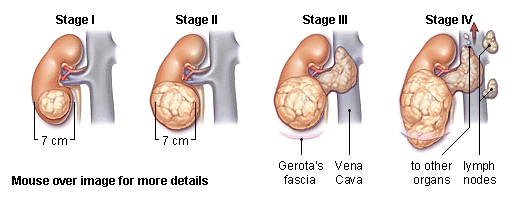
When ever cells of any organ or parts of your body regenerate or start multiplying faster than normal rate, they develop into abnormal mass called cancer. Your kidneys are two in number, located on both sides of spine in mid abdominal region.They have same potential to develop cancer if there are certain causative factors present. It is also known as renal cancer or malignancy because it has tendency to spread to different parts of your body. Most of kidney cancers begin inside the renal tubular cells, main body of kidney, and is know as renal cell carcinoma. They may also arise in renal pelvis, which is the collecting channel of urine. The encouraging aspect of kidney cancer, of which renal cell cancer is commonest variety, is that, it is detected early during some routine non-invasive laboratory examination. Which makes its treatment and prognosis (course and prediction) successful. This positive factor also helps preventing its spread beyond the kidney structure. Most commonly, one of your kidneys may develop cancer, but it is not unusual for both kidneys to be effected with it.

Ÿ  Incidence of your primary kidney cancer has been estimated to be 2%-3% of all cancerous growth in body. The age of occurrence of your renal cancer becomes more common after 45 years and reaches to maximum when you reach to the age of 65-70 years. The kidney cancer also effects children under 4-5 years, commonest being know as Wilms tumor. Renal cell carcinoma accounts for 85% of kidney cancers worldwide.

Ÿ  Gender wise male are more detected to be suffering from kidney cancer than females. The ratio is 1.5/1.

Ÿ  The survival for five years from your kidney cancer is about 70%, Which is due to early detection. In males, kidney cancer is the tenth most common cause of death. 100,000 people die each year due to renal cancer all over the world (kidney health Australia).

symptoms and signs of your renal cancer included are, blood in urine (hematuria), pain in flanks, abdominal mass on examination, fever of long standing not associated with any flu like illness, loss of your apatite, loss of weight for unknown reasons, anemia due chronic blood loss in urine, swelling in ankles and feet due to fluid retention, feeling extreme tiredness. When you kidney carcinoma spread to distant organs it may cause bone pain, breathing difficulty, and hemoptysis ( coughing of mucus with blood).


Risk factors

Ÿ  Age is easily the most common risk for any slow progressing disease. It has same predilections for development of your  renal cancer. The age risk begins after 40 years and peaks at 60 years. Some kidney cancer (Wilms tumor) is found in kids also.

Ÿ  If you are black colored race, you run greater risk for kidney cancer than white colored individuals. The reason for such predilection is not clear.

Ÿ  Obesity is a well proven risk for your kidney cancer. It is concluded from studies that about one fourth (25%) of total renal carcinomas are encountered in obese or overweight for height individuals (UK cancer research study published 2011). Obesity is generally considered if your BMI ( body mass index, the weight for height measure) is found 30 or greater. This is particularly more commonly observed in women, and is attributed to some hormonal changes with obesity. This might put further susceptibility for kidney cancers in females.

Smoking cigar or cigarettes, increases your chances for developing kidney cancers by twice more than non-smokers. There should be no surprise to note that smoking 20 or more cigarettes a day will double your risk for renal cell carcinoma (most common kidney cancer) than non-smokers.


Lifestyle factors, Support and Prevention

As long you are alive and getting treated for some intractable disease or defect, means  not to give up hopes. You have to try all possible means to make your life as comfortable as possible. This may require adopting big changes and habits that you were following before you were diagnosed as suffering from kidney cancer. There are certain factors other than therapeutics, that may help you live more relaxed, less stressed and depressed daily life. Your kidney cancer may be needing a long term treatment, hence your adoptability to all the side effects of chemo, surgery or radiotherapy is desired. 

Ÿ  Alternative treatment so far has no well established authentic curative or preventive value. They do have great supportive element in managing your kidney cancer before, during and after treatment has begun. Some of you may still decide to have chosen alternate treatments to get some comfort from pain and stress associated with your cancer. It is done almost always in conjunction with chemo, radiotherapy or surgical palliation of kidney cancer.

Ÿ  Acupuncture is one very old modality used to ease pain and stress of severe protracting illnesses, like your kidney cancer. It is achieved by inserting needles in your body at specific pressure points on skin(National Institute of Health). It will help you combat pain, depression, headaches during your renal cancer therapy and afterwards.

Ÿ  Massage therapy has not been linked to treat your kidney cancer. It will be definitely a way to reduce your distress of cancer diagnosis, side effects of treatment and overall feeling of well being. It also helps you get better sleep, lift your spirit from low ebb to greater levels. It involves pressing , softly squeezing and rubbing your soft body parts, which bring sense of aura and comfort.

Ÿ  Meditation helps to improve your life quality. It is a way of body and mind control. Its has been found to be very beneficial in all kinds of chronic pain, particularly so in your kidney  cancer condition (National Institute of Health). Your meditation guide can be your doctor, psychiatrist or an expert in meditation field. It is usually done in place/room where you are free of any external sounds or noise. It is shown to enhance your mood, immune system and increase your mental ability and alertness, a positive change in your kidney cancer condition.

Ÿ   Exercise regularly according to your state of health and stamina. This should be done with your health care provider’s advise. There is no doubt that exercise will counteract the feeling of fatigue you get from your renal cancer and its therapies you have gone through.

Coping and Support

Having the knowledge of one of kidney cancer patient is quite distressing on its own. You will have to come to terms with the situation by yourself. You will need equal support from your dear and loved ones around. Your doctor/oncologist will always be there, in case you need advise regarding any change in remedy or health complaints. You will be more stable mentally if you make free communication with your family members and friends. Share with them each and everything about your kidney cancer status, the progress and all the distresses of your condition.

Ÿ  Obtain information regarding your kidney cancer from your oncologist/healthcare provider. Internet is also a good source for gaining minute details about kidney cancer, treatment and associated side effects with each modality. This will make you more assure of what you will have to do to face these.
Ÿ  There are local cancer groups where you can join and share their experience, grievances. You will also be able to get some new information regarding you kidney cancer.

Prevention

There are well known risk factors for developing any cancer. Same is true for kidney cancer. Avoiding those risk will prevent occurrence of kidney cancer.

Ÿ  Quitting smoking will play a major role in preventing kidney cancer, as it is a well known and big risk for cancer development. It has some more benefits on your health, like positive effect on cardiac status and preventing lung cancer. In addition to your own will to quit you can take some slow nicotine release substances to quit smoking gradually. Your doctor will be guiding you how to use these.

Ÿ  If you are involved with occupation which exposes you to cancer causing toxins. These are steel manufacturing units, asbestos production work, benzene exposure in batteries making occupation. You need to take all standard safety measure to prevent long term accumulation of toxins which may cause kidney cancer. Wearing mask along with other measure will be very effective.

Ÿ  Alcohol in moderation should be the ideal prevention for avoiding this risk factor for cancer.

Ÿ  Well balanced diet which is rich in vitamins and minerals is healthy choice. Fresh fruits and vegetable, fish . Avoid meat, butter, cheese, cakes and fat rich biscuits. Having fish rich in omega-3 fatty acid concentration is shown to prevent kidney cancer.

Ÿ  Blood pressure control is well advised. This is risk for kidney cancer. Take your medicine for high blood pressure as advised by the doctor. Reduce your salt intake ,specially using table salt, exercise regularly to keep strong and stable cardiovascular status.
Ÿ  Reduce weight, if you have more weight for height. This is achieved effectively with taking good high fiber diet and avoiding calories. Exercise on daily basis for 20 minutes at stretch. Exercise techniques can brisk walk, swimming, cycling and walking uphill.


Natural Treatment

Black Cumin

Natures cure for just about any disease, black cumin is used as an anticancer, immunoprotectant agent. Also known as nigella sativa, it lessens oxidative stress during cancer and works towards the apoptosis of kidney cancer cells (Corder C, Benghuzzi H, Tucci M, Cason Z., University of Mississippi Medical Center, Jackson, MS 39216, USA). Black cumin contains all the essential fatty acids required by the human body. It also contains iron and manganese.

Curcumin

Curcumin is a substance from the Indian spice Turmeric. It is known to induce apoptosis in the most malign kidney cancers (Nutr Cancer. 1996;26(1):111-20). It also inhibits tumor growth and reduces inflammation caused by kidney cancer. Further research has acknowledged that it protects the kidneys from developing cancer and sensitizes the cancer to chemotherapeutic and radiotherapy agents (Nutr Cancer. 2010;62(7):919-30).

EGCG

Epigallocatechin gallate (EGCG) is a green tea catechin, or better known as an antioxidant. It has been proved to promote apoptosis (programmed cell death) of cancer cells. It is more effective when used with quercetin, which is also a green tea compound (Food & Function Issue 6, 2012). Research also proves that EGCG inhibits proliferation in renal cell carcinoma (Oncol Rep. 2009 Mar;21(3):635-40).

Genistein

 Found in a number of plants like soy beans, lupin, fava beans and kudzu, Genistein hails from a family of isoflavones that occur naturally in these plants. Genistein has been found to have anti-oxidant properties and has also been shown to exhibit anthelmintic reaction. The major role of Genistein is as a tyrosine kinase inhibitor. It inhibits the on/off function of enzyme tyrosine kinase, thus reducing the risk for the development of cancer. Also recognized as an angiogenesis inhibitor, Genistein reduces the cell's capacity to multiply and divide, and having an overall effect on its survivability.

Melatonin

 Produced by the pineal gland, Melatonin is a naturally produced hormone. Melatonin is produced for maintaining the body's circadian cycle (Sleep-wake cycle). Studies have also shown its powerful anti-oxidant and anti-inflammatory properties. Combined with anti-cancer drugs, melatonin has be shown to produce effective results in suppressing cancer cell growth in your renal malignancy, due to its anti-oxidant properties. Melatonin is naturally produced when the body is asleep at night, and this has been linked to higher cancer rates for individuals who work at night (Rosner B, 2009). Melatonin produced naturally usually satisfies the body's need for the chemical, but there are other sources for it such as almonds, peanuts, milk and other foods. Supplement form of Melatonin can also be taken under prescription of your doctor.

Omega-3 Fatty Acid

Omega 3 fatty acids are polyunsaturated fatty acids that are mainly obtained from marine and plant oils. Omega 3 fatty acid is considered very essential for the human body as it takes part in various bodily processes. Omega 3 fatty acids are are a part of three members consisting of alpha-linolenic acid (ALA), eicosapentaenoic acid (EPA), and docosahexaenoic acid (DHA). These fatty acids have been known to suppress the cell growth of cancerous cells. They are also linked to preserve the functioning of kidneys if taken in specific doses regularly.

Silibinin

 Occurring commonly in certain herbs, Silibinin is a flavonoligan and is a major component of silymarin. It is a potent anti-oxidant and has been found in various studies to have anti-cancer effects. A study reported on the Journal of National Cancer Institute in 2006, found Silibinins effectiveness in combating tumor growth by reducing the number of blood vessels that allow the tumor to grow. In-vitro Silibinin has also been shown to have wide anti-cancer effects against breast carcinoma cells, human lung carcinoma cells and other types of cancer (Zhao J, 1999).


Your kidney cancer needs different modalities of therapies at single given period after diagnosis. This can be hard on you. You need good diet to cope with side effects associated with each method of treatment you are going through. Diet rich in vitamins and minerals will surly provide the necessary strength. You can use supplements after taking your doctors advise. These will provide all in one combination form to make up for any dietary deficiency as they have proved good support in chronic ailments like kidney cancer.